




Staircase tight-spot moves: solutions for Victorian homes
Posted on 14/06/2026
Moving a sofa, wardrobe, piano, or even a bulky bed frame through a Victorian staircase can feel like a puzzle with one missing piece. The stairs are often narrow, the turns are awkward, and the banister seems to take up just enough space to be annoying. If that sounds familiar, you are in the right place. This guide on Staircase tight-spot moves: solutions for Victorian homes explains what makes these moves difficult, how to plan them properly, and which methods usually work best without damaging the property or the furniture.
Whether you are preparing a full house move, tackling a single bulky item, or trying to work out if a piece is simply too large for the staircase, the answer is usually not brute force. It is planning, measurement, sequencing, and a bit of patience. Let's be honest, the stairs in many Victorian homes were never designed with today's furniture in mind.
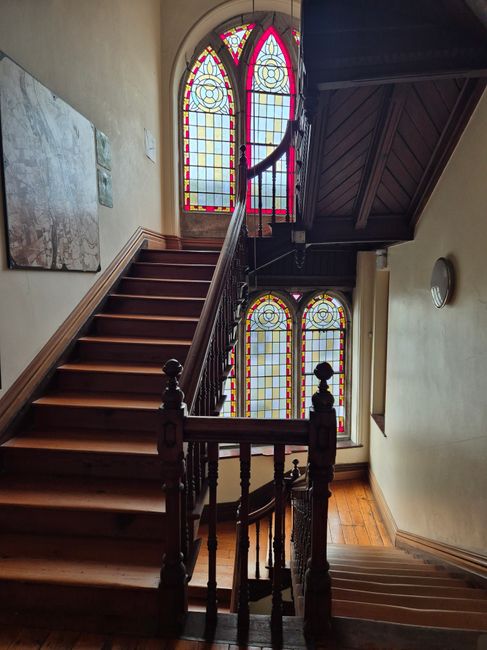
Why Staircase tight-spot moves: solutions for Victorian homes Matters
Victorian homes are characterful, but they are often awkward for moving day. Staircases may be steeper than modern builds, landings can be tiny, and handrails or low ceilings can reduce the usable width even further. In practical terms, that means the usual "just tilt it a bit" approach may fail very quickly.
Why does this matter so much? Because the tight spot is rarely just about inconvenience. It affects safety, time, stress, and the condition of your belongings. A scratched stair wall can turn into a deposit dispute. A bent mattress corner can leave you annoyed for months. And if two people are wrestling with an item that should have had a different route, the risk of strain or a drop goes up. Not ideal, obviously.
These moves matter even more in homes with period features: ornate banisters, narrow hallway entrances, tight turns at the bottom of the stairs, or old plaster that chips if it is brushed too hard. The challenge is part geometry and part care. In our experience, the better the route is thought through beforehand, the calmer moving day feels. That calm matters.
If your move is part of a wider house transition, it may also help to look at broader planning advice in how to keep a house move smooth and less stressful, because staircase access is only one piece of the puzzle.
How Staircase tight-spot moves: solutions for Victorian homes Works
The basic principle is simple: measure first, move second. But the real process has a few layers. You need to understand the item's dimensions, the staircase's usable space, the turning angle, and whether the object can be rotated, stood on edge, or partially disassembled.
Here is what usually happens in a well-planned tight-spot move:
- Measure the item carefully. Include height, width, depth, and any awkward protrusions such as arms, feet, handles, or mattress tags that catch on bannisters.
- Measure the staircase route. Don't just check the width. Measure the narrowest point, the landing, the turn, and the ceiling height where the item will pivot.
- Assess the angles. Victorian stairs can have sharp turns and narrow tread depths, so the item may need a diagonal route rather than a straight lift.
- Decide whether to dismantle. Removing legs, headboards, doors, or drawer units can make a huge difference.
- Protect the property. Use covers, blankets, and edge protection on bannisters, walls, and floors before the lift begins.
- Assign roles clearly. One person leads, one stabilises, and one watches for clearance. Too many voices can make things messier, not better.
The goal is not just to get the item upstairs. The goal is to get it there without friction, wobbling, or that horrible moment when someone says, "Hold on... I think it's caught." That sentence has ruined many a morning.
For heavier items, it can be helpful to understand lifting mechanics as well. The article on kinetic lifting and movement is a useful companion read if you want to see how body position and momentum affect control.
Key Benefits and Practical Advantages
When a staircase move is handled properly, the benefits go beyond simply "getting it done." It can save money, reduce damage, and lower the emotional friction that often comes with moving day.
- Less risk of furniture damage: Repeated bumping on stair corners is one of the fastest ways to mark a wardrobe or scrape a dresser.
- Less risk to the property: Victorian plaster, paintwork, and bannisters are more vulnerable than people expect.
- Better use of time: A measured, methodical lift often takes less time than several failed attempts.
- Safer for everyone involved: Controlled movement reduces slips, twists, and accidental drops.
- More confidence on moving day: Knowing the route in advance makes the whole house feel more manageable.
There is also a practical financial upside. If you can avoid emergency replacements, patch repairs, or last-minute storage changes, the budget stays steadier. That is one reason many people choose to plan awkward items in the same way they would plan packing or removals: with a proper sequence rather than a hopeful shrug.
If you are thinking about packing and breakables at the same time, proper packing techniques for moving can help you reduce the overall load before you even reach the stairs.
Who This Is For and When It Makes Sense
This approach is useful for a wide range of people, not just those with very large furniture. Victorian homes often create access issues for everyday items that would be unproblematic in newer houses. A sofa that fits the room may still struggle through the stairwell. A mattress may bend more than expected. A piano? Well, that is a different story altogether.
You will usually benefit from staircase tight-spot planning if you are:
- moving into or out of a Victorian terrace, semi, or conversion
- transporting oversized furniture with fixed or awkward dimensions
- dealing with narrow landings or sharp turns
- trying to avoid damage to decorative railings or walls
- working with limited manpower, time, or access windows
- storing some items and moving others in stages
It also makes sense when the route is not obvious. Sometimes the front door looks fine, but the turn into the hall is the real problem. Sometimes the top of the staircase is wide enough, but the bend halfway up is where everything stalls. Victorian homes love little surprises like that.
If you are moving only one awkward item, it may be worth checking whether a specialist approach is more suitable. For example, piano moves and similarly delicate heavy items need a more cautious method, and there is a dedicated resource on the risks of moving a piano alone that explains why solo lifting can go wrong quickly.
Step-by-Step Guidance
Here is a practical process you can use before the movers arrive, or before you attempt the move yourself. It is deliberately simple, because simple is good when there are stairs involved.
1. Clear the route completely
Remove rugs, shoe piles, picture stands, coat hooks, and anything else that shrinks the hallway. You want the route to feel visually obvious. Victorian entrances can be clutter traps, and clutter turns small spaces into impossible ones.
2. Measure the item and the staircase
Use a tape measure and write the numbers down. Measure at the widest point and the tightest point. If the item has removable parts, measure again with and without them. Take note of ceiling height near the turn.
3. Identify the pivot point
Most awkward items need a pivot. That could be the lower landing, the turn at the stairs, or the top hallway. The pivot point is where the item changes angle, so it needs breathing room. If there is a picture rail, low ceiling, or a chunky banister cap, factor it in.
4. Remove anything detachable
Take off legs, cushions, doors, drawers, mirrors, and shelves where possible. Keep fixings in a labelled bag. It sounds basic, but people forget this at the exact wrong moment.
5. Protect the building
Cover bannisters, wall corners, and floorboards. If possible, use thick blankets or specialist covers to stop scuffs. In older homes, paint and plaster can mark easily, even with light contact.
6. Rehearse the route
Before the heavy lifting starts, walk the path with the item's dimensions in mind. Imagine the angle, the turn, the tilt. Sometimes one person will spot a snag before the lift begins, which saves a lot of effort and a lot of muttering.
7. Lift slowly and communicate
Count steps if needed. Use short instructions: "tilt," "pause," "left a bit," "stop." Avoid long explanations mid-lift. Nobody wants a lecture while carrying a wardrobe up a stairwell.
8. Reassess if it feels wrong
If the item is forcing the wall, scraping the rail, or throwing the lifters off balance, stop. Backing up and changing the method is better than pushing through and paying for damage later.
For bedding and soft items, planning can be easier if you have them wrapped and compressed properly. The guide to packing a bed and mattress safely is useful if your staircase is only one part of a bigger furniture move.
Expert Tips for Better Results
Small details make a big difference in tight Victorian staircases. A move that looks impossible at first often becomes manageable once the right angle is found. Truth be told, that is half the job.
- Use a second measure for confidence. If something feels marginal, recheck it. A couple of millimetres can matter more than people expect in a tight stairwell.
- Try diagonal, not just vertical. Many long items travel better when angled through the space rather than kept upright.
- Keep hands clear of pinch points. Fingers near bannister rails or the underside of an item are asking for trouble.
- Remove friction from the route. Doors open fully, floors are clear, and no one is standing in the blind spot.
- Use pauses strategically. A short rest on a landing can help with grip and control. It is not weakness; it is sensible.
- Do the difficult item early. Moving the awkward piece before exhaustion sets in often leads to better decisions.
If your move involves several rooms and you are trying to keep the day orderly, a broader planning article like achieving a smooth house transition without stress can help you connect the staircase work to the rest of the move.
And one more thing: if a piece looks like it needs three people but you only have two, do not "just give it a go" and hope. Victorian staircases are not impressed by optimism.
Common Mistakes to Avoid
A lot of staircase damage, furniture damage, and personal strain comes from a handful of avoidable mistakes. These are the ones that crop up most often.
- Measuring only the item, not the route. If you skip the landing or ceiling height, the numbers are incomplete.
- Ignoring protrusions. A sofa arm, bed foot, or wardrobe handle can be the thing that catches, not the main body of the item.
- Trying to force a straight line. Most Victorian staircases need rotation, not brute force.
- Leaving walls unprotected. One small scrape can become a visible repair job.
- Rushing the top turn. The final angle is often the hardest part, and that is where people tend to lose patience.
- Underestimating weight distribution. If one side carries too much of the load, the move becomes unstable fast.
There is also the "we'll work it out when we get there" mistake. To be fair, that phrase is responsible for a lot of unnecessary stress. A little planning almost always beats improvisation on staircases that are already tight by design.
If you are decluttering before the move, decluttering before moving can reduce the number of items that even need to face the staircase in the first place. Fewer items, fewer headaches. Simple.
Tools, Resources and Recommendations
You do not need a workshop full of specialist kit, but the right moving essentials help a great deal. A good set of tools often saves more time than another pair of hands who does not know the route.
| Tool / Resource | Why it helps | Best for |
|---|---|---|
| Measuring tape | Confirms route width, item size, and landing clearance | Every move, no exceptions |
| Furniture blankets | Protects walls, bannisters, and furniture edges | Victorian stairs with delicate finishes |
| Straps or lifting aids | Improves grip and load control | Heavier items with awkward balance |
| Labels and bags for fixings | Keeps screws and fittings together after dismantling | Beds, wardrobes, shelving |
| Floor protection | Reduces scuffs and marks in hallways and landings | Hard floors and original floorboards |
| Clear move plan | Helps everyone know the order and the route | Any multi-item move |
For bulky furniture that does not belong on a staircase until it is wrapped and prepared, you may also find the guidance on protecting a couch for longer-term storage useful, because good wrapping and protection habits carry over into moving day.
Also worth considering: if the staircase route simply is not suitable, storage can buy breathing room. A short-term storage plan may be the difference between a forced move and a sensible staged move. The page on storage options is a useful place to start when the stairs say "no" but the schedule says "not yet".
Law, Compliance, Standards, or Best Practice
For domestic moves, there is rarely one single rulebook for staircase access, but there are still important responsibilities. In the UK, moving safely is usually about following accepted health and safety best practice, using equipment properly, and avoiding foreseeable harm to people and property.
That means a few things in plain English:
- Do not exceed safe lifting limits or force awkward loads if the route is clearly unsuitable.
- Use enough people for the item, the route, and the weight involved.
- Keep pathways clear to reduce slips, trips, and impact injuries.
- Use protective materials where older surfaces or fragile finishes are at risk.
- Make sure any professional movers are insured and transparent about what they can and cannot safely handle.
For older Victorian properties, it is also sensible to treat the building as fragile in places. Original plaster, timber banisters, and narrow hall walls can all be more vulnerable than modern equivalents. If there is any doubt, a cautious approach is the right one. That is especially true for specialist items, heavy furniture, or awkward corners that require lifting in stages.
If you are comparing providers, it helps to understand how they approach risk, insurance, and method statements. The page on insurance and safety is a good reference point for the kind of reassurance people should expect before anything is lifted.
Options, Methods, or Comparison Table
There is no single perfect method for every staircase. The right choice depends on the item, the landing shape, the number of helpers, and how much risk you are willing to accept. Here is a straightforward comparison.
| Method | Best when | Pros | Limits |
|---|---|---|---|
| Manual carry with two or three people | The item is bulky but manageable | Flexible, low-cost, straightforward | Can be risky if the route is very tight or the item is heavy |
| Dismantling before the lift | Legs, doors, or frames can be removed | Makes access easier, reduces snagging | Needs time, tools, and careful reassembly |
| Angled pivot movement | The stairwell has enough landing space for rotation | Often the best way through Victorian turns | Requires practice and good communication |
| Staged move with storage | The staircase cannot safely handle everything at once | Reduces pressure and rushed decisions | May increase planning time |
| Professional removal support | The item is valuable, heavy, or unusually awkward | Better technique, safer handling, less guesswork | More expensive than doing it yourself |
For many households, the best route is a mix: dismantle what you can, protect the property, and use experienced help for the items that are genuinely awkward. That mix tends to work better than trying to apply one method to everything.
Case Study or Real-World Example
A typical Victorian-home scenario goes like this. A client has a large three-seater sofa with solid arms, a narrow hallway, and a staircase that turns sharply halfway up. At first glance, the sofa looks impossible. It sits in the front room waiting for a miracle, which is never a great sign.
The solution was not force. The team measured the sofa's full footprint, checked the landing width, removed detachable feet, and wrapped the arm edges. The lift began with the sofa rotated diagonally, then pivoted at the landing where the ceiling height allowed a small roll in angle. One person led the top end, one stabilised the base, and the third watched for contact with the wall.
The important bit? They did not try to rush the turn. They paused twice, adjusted the angle slightly, and used the landing as a controlled rest point. The sofa went up without a scrape. No heroic scrambling, no wobbling, no damage. Just a careful, calm route through a stubborn staircase.
That is often how these moves go in real life. They look impossible until the right angle appears. Then suddenly it is all quite manageable. Funny, that.
For moves where the property layout is especially restrictive, a local narrow-access approach can be just as important as the lift itself. The article on narrow-access van tips for Teddington High Street moves is helpful if the access challenge begins outside the front door.
Practical Checklist
Use this checklist before the move starts. It is short, but it covers the essentials.
- Measure the item at its widest and tallest points
- Measure the narrowest parts of the staircase route
- Check landing space and turning room
- Remove detachable parts where possible
- Protect walls, bannisters, and floors
- Assign clear roles to each helper
- Decide the pivot point before lifting
- Plan a fallback option if the item does not fit
- Keep the hallway and stairs free from clutter
- Pause and reassess rather than forcing a bad angle
If you are moving several pieces at once, it may also be worth organising the rest of the day around packing and labour. The guide to better packing for moving day can help reduce the pressure on the staircase by making everything else more orderly.
One small but useful habit: take photos of the staircase and the item before moving begins. It gives you a reference if you need to discuss damage, clearance, or reassembly later. Not glamorous, but practical.
Conclusion
Victorian staircases are beautiful, but they are not forgiving. The right answer to a tight-spot move is almost never "push harder." It is to measure carefully, strip the item down where you can, protect the property, and use a route that respects the shape of the house. When you do that, even awkward furniture starts to feel less like a crisis and more like a puzzle with a sensible solution.
In the end, staircase moves in Victorian homes reward calm thinking. A little planning saves time, protects the building, and makes the whole day feel far less fraught. And if the item is truly awkward, getting the right help early can be the difference between a smooth move and a story you never want to repeat.
If you want support with an awkward move, learn more about the team behind the service on our about us page or get in touch here.
Get a free quote today and see how much you can save.